
Saturday, May 1, 2010
The 2011 Hyundai Elantra has been unveiled at the Busan International Motor Show in South Korea.
The 2011 Hyundai Elantra is powered by the company's new 1.6L Gamma Gasoline Direct Injection engine that develops 140 PS and 17.0kg/m of torque. The engine of the 2011 Hyundai Elantra is coupled with 6-speed automatic transmission and a front-wheel drive system. The company claims the new 2011 Hyundai Elantra is 10% more fuel efficient in comparison to its direct competitors.
The 2011 Hyundai Elantra’s dashboard inspired from the latest Kia Tucson and the newest Kia Sonata. What are also evident are two-tone inserts and an all new centre console that beams of higher class and quality. The probable engine under the 2011 Kia Elantra could be a 1.6L four banger blessed with the direct engine technology to boost the efficiency.
Among the new car's available features in Korea are heated rear seats, puddle lamps, high-intensity-discharge headlamps, LED taillamps and an LCD information display in the instrument cluster.


Press Release
Hyundai Motor Co. had its world-premier of the all-new Avante compact sedan, the company’s best-selling model worldwide, at the Busan International Motor Show 2010 today.
"The new Avante encompasses Hyundai’s latest ambitions, featuring the best styling and performance in its class," Steve S. Yang, President & CEO of Hyundai’s Global Business Division, said at the Busan Exhibition and Convention Center (BEXCO) today. "We’re confident that it will once again redefine the compact segment worldwide."
With sportier and even more elegant lines than its predecessor, the new Avante ? badged as Elantra in markets outside Korea - continues Hyundai’s ’fluidic sculpture’ design philosophy.
Hyundai has applied its latest 1.6L Gamma Gasoline Direct Injection engine and a 6-speed automatic transmission to the front-wheel drive compact, the first time GDI and six-speed automatic have been featured on a compact sedan in Korea. The new Avante delivers a peak output of 140ps and maximum torque of 17.0kg·m. It is also about 10 percent more fuel efficient than its closest competitors, thanks to GDI, the six speed automatic and other fuel economy enhancements.
The new Avante will delight and surprise with a raft of other advanced features not found on other compacts, including HID (High Intensity Discharge) headlamps, LED combination lamps in the rear, heated rear seats, puddle lamps and a color TFT LCD information display nestled in the gauge cluster.
Under the Avante/Elantra badge, Hyundai has sold over 6 million units worldwide since the car’s launch in 1990. Hyundai will begin sales of the all-new Avante in the second half of 2010 in Korea.
At a separate commercial vehicle booth, Hyundai displayed a hydrogen fuel-cell electric bus and a Universe Limousine luxury coach, among other displays.
Hyundai’s New 1.6L Gamma GDI Engine
Hyundai displayed its all-new 1.6L Gamma GDI engine in Busan today, which it first showed in Beijing auto show last week. It is the smallest member of the Hyundai gasoline engine family to benefit from the application of Gasoline Direct Injection technology. With the help of GDI, this four-cylinder powermill develops 140ps, an approximately 13 percent improvement over a conventional 1.6L Gamma fed by MPI. GDI technology doesnt only boost power output: It also improves fuel economy while lowering emissions. The new Gamma also features Dual Continuously Variable Valve Timing, a Variable Induction System and exotic anti-friction coatings such as CrN Physical Vapor Deposition (PVD) coating and Diamond Like Carbon (DLC) coating.
Saturday, April 24, 2010
BMW unveiled the Concept Gran Coupe today at the Beijing Auto Show, China. the all-new 2010 BMW Concept Gran Coupe has been revealed, finally confirming BMW’s intention to enter the burgeoning four-door coupe market.
The four-door includes a variety of distinct features like the vaulted hood with forward-facing lines, a longer wheelbase, coupe-style roofline and short front overhang. BMW describes the intent of the concept: “the BMW Concept Gran Coupé carries the essence of brand values and the genes of BMW design into the future.”
At 1.4-meters high, the car is 10-cm shorter in height than the 5er and 7er sedan. Current rumors suggest that the car is already approved for production and will be marketed as the BMW 6-Series Gran Coupe to rival the Mercedes-Benz CLS-Class, a car which BMW does not directly compete against at this time.
According to BMW sources, the car is headed for production in 2012 and will be built on the same platform that underpins the 5-Series, 7-Series and the 5-Series Gran Turismo. The production model will be offered with the same mix of 6- and 8-cylinder gasoline and diesel engines as those models.


Press Release
Elegance and dynamic performance at the first BMW Design Night in Beijing.
Munich. With an exclusive Design Night on the evening of the first press day at Auto China in Beijing (April 23rd to May 2nd 2010), BMW provides an in-depth insight into its design philosophy and development strategy. The program of the BMW Design Night is modular in structure and presents extensive background information on the premium automobile manufacturer's innovative design culture. In addition to highlighting the long versions of the BMW 5 Series developed specially for the Chinese market, the main focus is on an elegant 4-door vehicle with striking dynamic proportions: the BMW Concept Gran Coupé.
The concept study on display symbolises the outstanding design expertise of BMW. The BMW Concept Gran Coupé concentrates the fundamental values of the brand. Its body design authentically captures a sense of superior dynamic performance and high-quality elegance. The shaping style, which follows a coherent pattern down to the last detail, convincingly visualises BMW's philosophy as an automobile manufacturer. As with the Concept CS 2007, BMW once again sets new benchmarks in the design of 4-door coupes with a distinctive sporty character.
Based on a powerful tradition in this segment, the BMW Concept Gran Coupé carries the essence of brand values and the genes of BMW design into the future. The concept shows the classic features of all BMW coupes: the long wheelbase, the vaulted bonnet with forward-pointing lines, the set-back greenhouse, the flat silhouette, the coupe-style roof line and the short front overhang reflect the dynamic potential of the vehicle. The surface structures and the fact that the design quality is geared towards perfection illustrate the aspiration of the brand BMW to build 4-door high-performance coupes with the sportiest proportions and the most elegant design.
In the BMW Concept Gran Coupé, BMW presents the vision of a 4-door vehicle which combines the exclusivity of a Gran Turismo with the fascination of a high-performance sports car. The design of the concept study underscores the expertise of the brand BMW in the development of vehicles with a distinctive sporty character which offer space for more than two occupants. This reflects the particular quality of the BMW Group design philosophy, which consists in precisely and authentically translating the specific values of product substance into an aesthetically convincing shaping style. The design process is set through with a passion for aesthetic appeal and dynamic performance, precision and perfection. This is how the uncompromising premium aspiration of a BMW Group product, the unmistakable style of the brand BMW and the precisely defined character of each model are given concrete form.
The body design of the BMW Concept Gran Coupé expresses sporty flair in its ultimate form. The 4-door vehicle clearly signals the very highest level of dynamic performance with its extremely elegant, flat and coupe-like proportions. Stretching the entire length of the vehicle and therefore measuring almost 5 metres, flowing lines dominate the design, giving rise to outstanding aerodynamic levels, just as the low centre of gravity reflects an agile driving response.
The front section is defined by the BMW kidney grille characteristic of the brand - an icon of body design which is not just central but also a dominating element of front design. The kidney grille of the BMW Concept Gran Coupé has a flat appearance, with an asymmetrical side view which emphasises the close attention to detail. The central section with the kidney grille is formally separated from other BMW icons such as the headlights and air inlets. The clarity of the LED front lights highlights the vehicle's precision and premium aspirations. The air inlet runs back an extremely long way into the side section, making the front section appear particularly wide. All elements of the front section appear to merge to form a single, elegantly curved movement.
The sporty, flat silhouette provides an impressive body height of just under 1.40 metres. This makes the BMW Concept Gran Coupé up to 100 millimetres flatter than the BMW 5 Series or the BMW 7 Series Sedan. The roof line tapers off gently into the rear, thereby elongating the vehicle's proportions. The forward-tilted shark nose visually extends the bonnet and creates characteristic BMW proportions with its forward-pointing dynamism. This stretched character is also highlighted by the side lines, where there is a deliberate avoidance of the typical sill line. The flat proportions make the window graphics appear extremely narrow and dynamic at the same time. Another BMW design icon, the Hofmeister kink, is especially strikingly formed - additionally emphasising the exclusive character of the vehicle. The frameless doors give the BMW Concept Gran Coupé a modern character since the glass surfaces appear to merge seamlessly without being interrupted by columns.
At the rear, only design elements such as the lights and tailpipe trim appear to be visible at first sight. The entire rear section appears slimmer and lighter at the centre, though still exuding power and dynamic performance since the volume is reinforced towards the sides. The L-shaped light banks feature a slight, almost subtle curve and the entire design of the lines and surfaces highlights the vehicle's elegant overall appearance. The third brake light, positioned in the rear window, is also fitted with LED technology. It takes up the kink in the roof and illuminates the entire width of the rear window. The powerfully flared wheel arches above the rear axle highlight the particularly sporty character of the BMW Concept Gran Coupé.
Another highly sporty and also elegant feature is the rim concept in which the individual spokes extend deep into the centre of the rim towards the hub, giving the rim a striking three-dimensional quality. The spokes themselves are not solid but relief-milled, giving them a visual lightness.
The sculptural shaping style characteristic of the entire body design of the BMW Concept Gran Coupé permits a unique interaction between concave and convex surfaces. It also enables the light to be selectively reflected and channelled. Thus the exterior mirrors integrated in the window shaft appear very light, blending harmoniously into the side view since their shape assimilates the entire line styling. The BMW Concept Gran Coupé is a further development of the classic design of a notchback sedan in which the individual body sections merge harmoniously into a flat, elongated and at the same time dynamic overall image. The effect of this 4-door vehicle derives not just from specific highlights but from its overall appearance, which authentically reflects its character. The car's dynamic potential is embodied in its proportions and lines, signalling power but also elegance and forward thrust.
Tuesday, April 20, 2010
Well now this car sees actual form as a concept and it’s called the Mercedes-Benz Shooting Break Concept.
The car that Mercedes unveiled today shows that there still may be hope for the estate buyer just as the CLS revived the estate as a good looking car. The Stuttgart automaker has announced that this concept will make its debut at the Beijing Motor Show, sometime later this week.
This model brings together features from the F800 Concept, from the Mercedes SLS AMG, from the FASCINATION Concept car and is hailed by Mercedes as some future insight in the design possibilities of the Coupe Concept.
The bonnet of this concept covers up a 3.5 liter V6 engine that develops 306 horsepower and 273 lb-ft of torque that features BlueEFFICIENCY technology in order to obtain better fuel consumption. Some other interesting technology that can be found on this concept is the dynamic full LED headlamps that are a world premiere on any car.
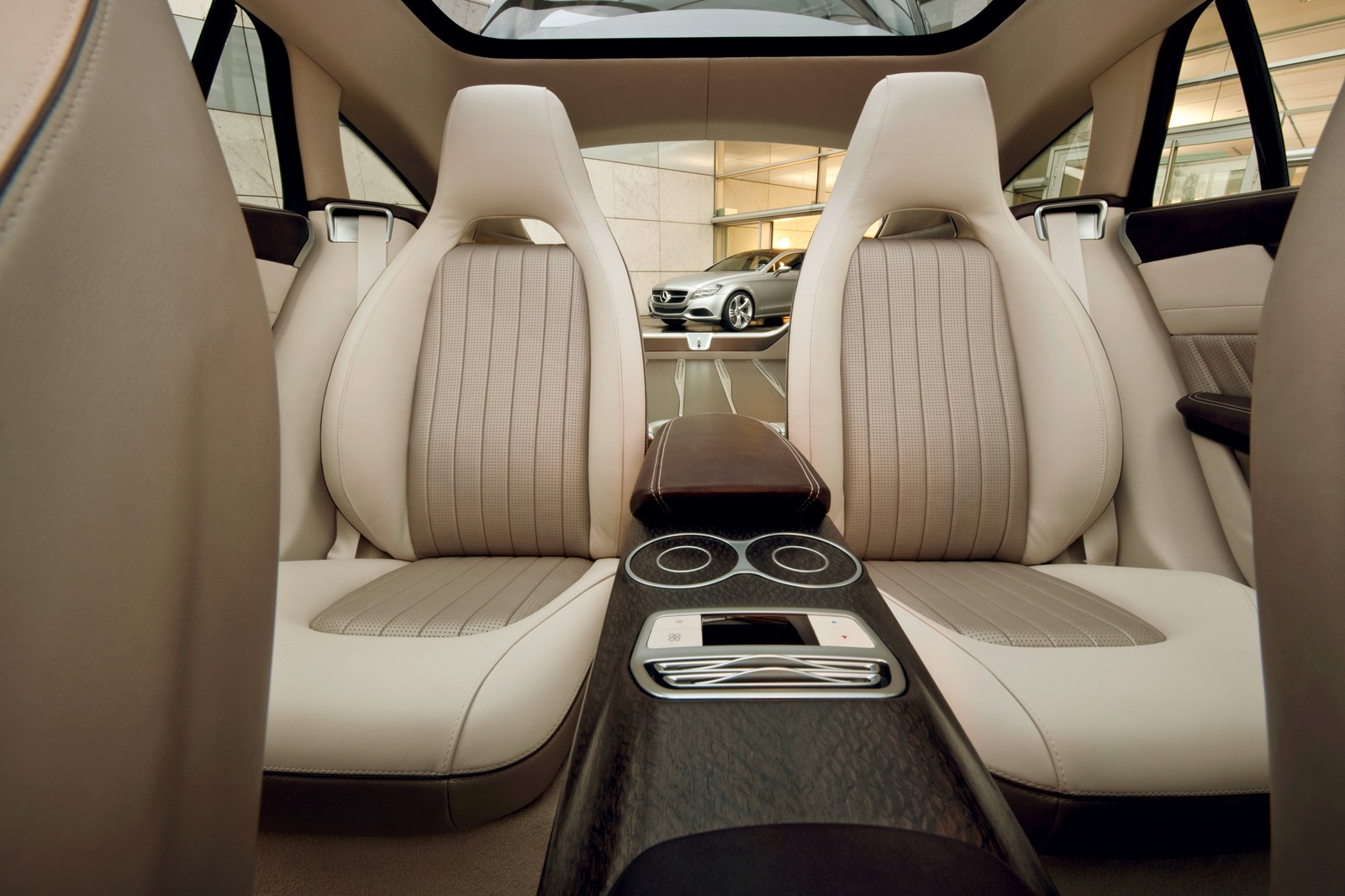
Inside, the car makes good use of contrasting cream and brown leather, though a third leather shade needlessly creates a tri-color scheme. The use of the cream tone as the dominant color that carries into the headliner works to make the concept feel more spacious and comfortable. This is further accentuated by the large glass roof that extends over the heads of the rear passengers. Behind the rear seats are stylish storage units meant to fit items like a laptop or tool kit, with a drawback that they may be hard to reach. A flat wooden floor in back will make sliding luggage or golf clubs in and out of the car a bit easier.
Should this concept hit production, it will be the best competitor for the BMW 5 Series GT and i have to admit, as far as looks are concerned the Mercedes-Benz Shooting Break Concept is already winning.


Press Release
THE SHOOTING BREAK CONCEPT CAR: TAKING THE COUPÉ DESIGN TO NEW HEIGHTS
World premiere at "Auto China 2010"
* Innovation four-door Coupé with sloping tail end
* World premiere: dynamic full LED headlamps
* Forerunner: new V6 petrol engine with direct injection
In October 2004 Mercedes-Benz established a new market segment with the four-door Coupé CLS. In September 2008, the brand revealed a fresh and exciting interpretation of the emotionally-appealing Coupé-based design in the form of the FASCINATION concept car. Now making its premiere at Auto China 2010 is the Shooting Break concept car - a further insight by Mercedes designers into the possible future development of the Coupé concept. The Shooting Break concept car also represents a clear indication of the further emotional appeal of the Mercedes design idiom.
Wide and flat, with a long bonnet and a roof which continues through to the rear: the Shooting Break concept car features some astonishing proportions which at the same time are clearly reminiscent of another design icon - the CLS. The design of the front is completely new, but makes use of elements which are mindful of the SLS AMG super sports car: the radiator grille, with the large star and eye-catching, bionic slats, is not integrated into the bonnet but has been designed separately in the form of a "soft nose". The grille is flanked on each side by full LED headlamps, which for the first time feature LED technology for all of the usual dynamic light functions. The side profile is given a touch of dynamism thanks to the high, exaggerated beltline sweeping towards the rear, and the dramatic character line which is supported by the powerful-looking rear wheel arches. The coupé-like side view is also emphasised with a low window design which also highlights the greenhouse with polished aluminium trim.
The interior is dominated by natural wood and leather materials. One eye-catching feature is the large full-length centre console. It highlights the four- seat layout as well as the high levels of comfort afforded by the Shooting Break concept car. The wooden floor of the luggage compartment reflects the true interpretation of this area of the vehicle, where the dark-stained silky oak contrasts against inlaid aluminium protective loading strips.
The Shooting Break concept car is driven by the forerunner to the forthcoming new V-engine generation from Mercedes-Benz. The V6 benefits from a 60° cylinder angle and a displacement of 3.5 litres, and is characterised by direct injection featuring a control system which enables lean-burn operation. The six-cylinder engine produces 225 kW (306 hp) with a maximum torque of 370 Nm and in line with the BlueEFFICIENCY criteria of Mercedes-Benz also sets new standards among the competition in terms of fuel consumption.
The exterior: stylish and sporty
The proportions are clearly those of a coupé: the long bonnet, narrow-look windows with frameless side windows, and dynamic roof sloping back towards the rear create a basic stance with which it looks ready for the off. It is only when taking a second look that it becomes clear that the Shooting Break concept car actually has four doors and an estate rear. As such, this study in design reveals its philosophical links with the four-door CLS Coupé, a car which has established a new market segment since 2004 and today is already seen as a design icon which is likely to occupy a very special place in the history of the motor car. The Shooting Break concept car may well be looked back on at some point as having played a similar role, taking ideas from the FASCINATION concept car premiered in 2008 and projecting them into the future.
"The Shooting Break concept car is based on the great tradition of a stylish, cultivated sportiness which has always characterised the great Mercedes Coupés, and it takes this unique legacy an exciting step further," explains Professor Gorden Wagener, chief designer at Mercedes-Benz. "At the same time it points the way towards the future design idiom of Mercedes-Benz."
The vocabulary of the design idiom includes the contrasting play between lines and exaggerated areas, which combine to create an animated area of interaction. The expressive design of the front immediately catches the eye, using elements which are mindful of the SLS AMG super sports car, and with a radiator grille which for the first time has been designed as a "soft nose" and is not integrated into the bonnet. This contributes to better pedestrian protection and at the same time also helps to improve the focus on the long, sporty bonnet. The grille is dominated by the large central star, highlighting its relationship to the other Coupés of the Mercedes brand. It is supported by bionic, curved grille slats. Their curved design is reflected in the expressive look of the front apron and air intakes.
Particularly eye-catching are the full LED headlamps, which for the first time offer all of the regular dynamic light functions using LED technology. Inside they are divided into three arrow-shaped layers from top to bottom: the upper layer contains an LED indicator, beneath which is a striking LED side light offering LED low beam functions. The side light can also be seen when the dipped beam function is switched on, thereby creating a novel and separate night-time design and distinctive look. The lowest level of the headlamp houses the main beam and nightview functions. A total of 71 LEDs not only provide an unmistakable appearance, but also a significantly enhanced view of the road compared with previous systems.
The side profile of the Shooting Break concept car is dominated by the low, frameless side windows, the coupé-like shape of which is further highlighted with the incorporation of a polished aluminium frame along the body. Thanks to the positioning of the outside mirrors on the beltline, the side line is emphasised and all-round visibility has been improved in the region of the A-pillars. The side windows are supported on a high beltline, which slopes towards the rear in a fresh interpretation of the classic "dropping line" of iconic Mercedes Coupés. An additional exciting touch has been made with the prominent, muscular hip points which forcefully support the side line. This interaction gives the impression of a sprinter, poised in the starting blocks, ready to release an explosive forward surge of energy. The roof follows through to the rear and also drops away in typical coupé fashion. Another special feature is the recessed, filigree door handles, which emerge on being touched with the aid of sensors to allow access to the interior.
The side view is rounded off with wide wrap-around tail lights featuring LED technology. As such they form a linking element to the low, steeply-angled estate car rear end with top-hinged tailgate. The shape is emphasised by the broad shoulder line, which is clearly visible from behind and supports the lowered-look greenhouse. The twin pipe exhaust system, with two polished exhaust covers, is integrated into the rear bumper, which features an elegantly curved wing.
Also contributing to the special appearance of the Shooting Break concept car is the exceptional paint finish. A satin-finish clear coat has been used, which gives the vehicle's allanite grey magno colour a mysterious glint and also further brings out the Coupé's exquisite lines.
The sporty look of the Shooting Break concept car is complemented with large 20-inch sterling silver wheels, featuring a special bionically arranged five-spoke filigree design. They allow a glimpse of the large brake discs behind. The front wheels are fitted with 255/30 ZR 20 tyres, while the rear of this exceptional vehicle sits on 285/25 ZR 20 tyres.
The interior: design makes quality noticeable; high-quality materials, hand-crafted perfection
A large panoramic glass sunroof provides a glimpse into the high-quality, perfectly hand-crafted interior of the Shooting Break concept car, where natural materials such as wood and leather dominate. Wood is used on the trim elements and door pulls, the instrument panel and centre console, and primarily on the luggage compartment floor in the rear. When it came to choosing the wood, the interior designers opted for silky oak on account of its unusual, lens-shaped texture. The wooden floor in the luggage compartment has inlaid aluminium protective loading strips, and is reminiscent of finishes normally seen in yacht building.
Four saddle bags along the sides of the luggage compartment are useful for storing small tools. They are finished in leather, a material which has been used extensively throughout the Shooting Break concept car: in fact, almost ten square metres of leather have been incorporated into the interior. Light sections of porcelain-coloured nappa leather form an attractive contrast to the dark-brown natural-coloured aniline leather and perforated metallic-silver finish seat cushions and door centre panels. Extensive double-lapped stitching and discerning colour-coordinated upholstery seat piping reflect the hand-crafted perfection and attention to detail, as does the tuck stitching on the instrument panel, door sill covers and seat backrests, all of which highlights the contours of the components extremely well.
Perfection and attention to detail also apply to the trim elements. While on the exterior they are polished to a high-sheen finish, in the interior they feature a matt finish. A total of seven manual processes are necessary - from grinding to polishing - to transform the components, which are milled completely from aluminium, into their final decorative form. The matt finish of the interior trim has also served as inspiration for the metallic-silver leather on the seats, door centre panels and bags in the luggage compartment. The deep-pile carpet in the footwell - finished in porcelain colour - is a luxurious material used by Maybach-Manufaktur. The light-coloured roof liner made of silk cloth adds the finishing touch to the impression of comfortable elegance in the interior.
The Shooting Break concept car is clearly a four-seater. The four identically shaped leather seats have a touch of the sports car about them thanks to their integrated head restraints. Openings in the upper area of the backrests make it possible to see through the seats. A large full-length wood console on the transmission tunnel provides a visual divide between driver and front passenger and at the same time indulges the occupants with two large leather-covered armrests. It also houses two cup holders as well as controls for the rear-compartment air conditioning. The centre console is finished off at the rear with inlaid work: curved Mercedes lettering which harks back to the style of the 1920s. The striking cursive-script lettering is also repeated on the front door sills.
Since the central screen has been integrated into the upper part of the instrument panel, the cockpit has a "wrap-around" effect. The elegant verve and bionic details of the exterior are captured, among other things, in the dynamic wave-design air vents in the instrument panel. An analogue clock sits in the centre. The instrument cluster comprises three tubes for dial-type gauges as well as a colour display for service indications.
The headlamps: exciting LED technology offering full functionality
The Shooting Break concept car has dynamic full LED headlamps, which combine the exciting daylight colour impression of LED technology with the performance, functionality and energy efficiency of today's bi-xenon light generation. The new light system, due to make its debut in series production this year, features the Intelligent Light System which has already been tried and tested in Mercedes models with bi-xenon headlamps. Its five light functions - country lights, motorway lights, enhanced fog lights, active curve lights and cornering lights -have been specifically designed for typical driving or weather conditions.
The light specialists at Mercedes-Benz have also been able to combine LED technology with the innovative Adaptive Highbeam Assist for the first time, leading to a completely new level of safety at night.
The engine: enhanced performance, enhanced efficiency
The Shooting Break concept car is driven by the forerunner to the forthcoming new V-engine generation from Mercedes-Benz. The special features of the spray-guided direct injection engine include the latest generation of piezo-electric injection valves which enable multiple injections. Better lean operation is possible thanks to load monitoring of the pressure information. Even the operation of the ancillary components has been made efficient and there is also a start/stop function. The V6 with a 60° cylinder angle and displacement of 3.5 litres produces 225 kW (306 hp) with a maximum torque of 370 Nm.
It's all in a name: the origins of the name "Shooting Break"
Break, or the homonym Brake, was the name once given to carriages used to "break" in wild horses and also to restrict (or "brake") their urge to move, so that they could be put to use as work horses. Since the carts could easily be broken as part of this process, people tended not to use ones which they may have urgently needed for other purposes. Where necessary, "Brakes" were often fitted out with variable bodies, which were only really used to carry along anything that may have been necessary for the hunt, for example. Any such vehicle which was used when going out shooting was called a Shooting Brake or Shooting Break. In the 1960s and 1970s motorised Shooting Breaks were popular in Great Britain - exclusive cross-over vehicles, which combined the luxuriousness of a coupé with the luggage space of an estate.
Friday, April 16, 2010
Ford unwrapped its new MyFord Touch infotainment system at the 2010 Detroit Auto Show in January, The fuel-efficiency of an engine is one way to save gas, but how that engine is used greatly effects fuel economy too.
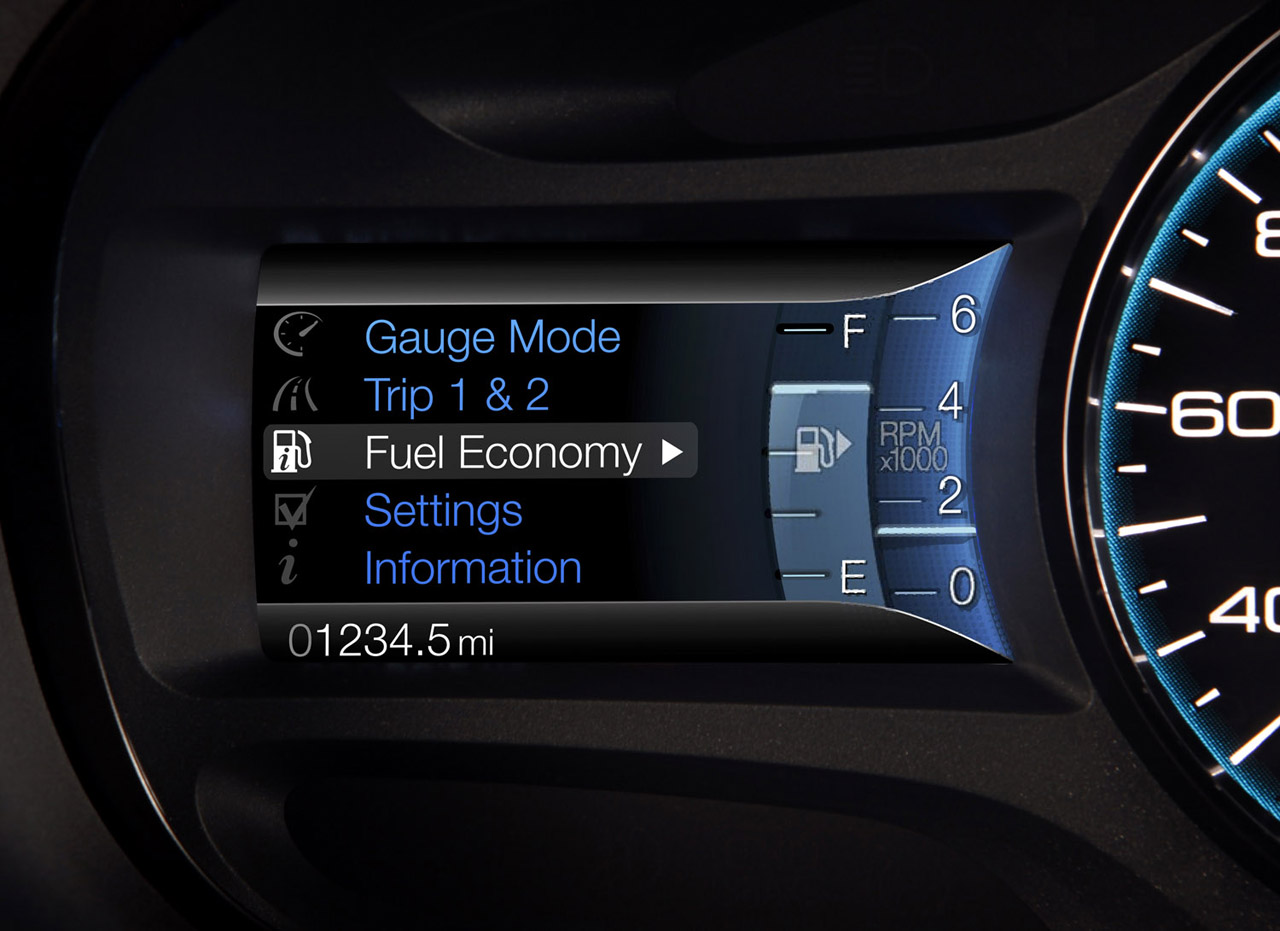
The MyFord system also offers up a bar chart next to the fuel display that shows real-time fuel economy performance along with mpg averages for the past 5, 10, and 30 minutes. Impressive stuff, but Ford has some competition. Garmin's similarly titled ecoRoute software offers many of the same options--it maps the most fuel efficient routes, tracks fuel usage over time, and features a report that keeps track of mileage and fuel use on a per-trip basis.
The new system also provides sophisticated data feedback on the car's fuel consumption that can "coach" drivers to maximize efficiency by pointing them towards the most economical driving techniques.
MyFord Touch will launch on the 2011 Ford Edge this summer, and then in 2012 on the Ford Focus. MyLincoln Touch will be standard on new Lincoln vehicles, starting with the 2011 Lincoln MKX.




Press Release
NAVIGATION ADDS ECO-ROUTE FEATURE
- New MyFord TouchTM driver connect technology provides an
array of real-time feedback on fuel efficiency performance that helps
coach drivers to optimize their miles per gallon
- MyFord Touch map-based navigation offers an Eco-Route option, which
instantly calculates the most fuel-efficient route for the driver. Ford
testing shows Eco-Route can help achieve fuel economy gains of up to 15
percent
- MyFord Touch launches this summer on the 2011 Ford Edge and will be
available globally on the 2012 Ford Focus. MyLincoln Touch will be
standard equipment on new Lincoln vehicles beginning with the 2011
Lincoln MKX
DEARBORN, Mich., April 15, 2010 - When it comes to achieving the best
possible fuel mileage the way you drive can be nearly as important as the
vehicle you drive.
Ford's advanced new in-vehicle system - MyFord TouchTM -
offers an array of real-time information on fuel economy performance that
can coach drivers to get more miles to the gallon and save on fuel costs. In
addition, MyFord Touch's map-based navigation system offers an
Eco-Route option that quickly calculates the most fuel efficient route a
driver can take to get from A to B.
MyFord Touch is the latest innovation from Ford to help drivers optimize
fuel economy. It builds on the fuel efficiency "coaching" concept Ford
pioneered on its SmartGaugeTM with EcoGuide cluster for the 2010
Ford Fusion Hybrid and Mercury Milan Hybrid as well as the all-new 2011
Lincoln MKZ Hybrid. The system provides real-time fuel economy data and
promotes fuel-efficient driving by showing a graphic of growing leaves and
flowers.
"We have learned that when we provide drivers the information and tools
in an interactive and entertaining way, they want to drive more fuel
efficiently," said Jim Buczkowski, director of Global Electrical and
Electronics Systems Engineering. "MyFord Touch provides an unprecedented
level of information and interaction so drivers can make the choice to be
more fuel efficient."
The green road home
When a driver provides a destination to the navigation system, MyFord Touch
accesses historical and real-time traffic data as well as posted speed
information to calculate three navigation options: Fastest, Shortest and
Eco-Route.
Eco-Route is not necessarily the fastest or shortest route but is the
most fuel efficient. Typically, it charts a course that avoids congested
freeways while maximizing the use of major roads where the driver can
maintain an efficient rate of speed. When Ford of Europe engineers tested
the feature, they achieved up to a 15 percent improvement in fuel economy
using the Eco-Route.
"When drivers use Eco-Route - particularly in combination with MyFord
Touch's fuel-economy feedback and fuel-efficient driving techniques - they
can achieve a noticeable increase in fuel efficiency," said Jennifer Brace-Mezigian,
Ford user interface design engineer.
In addition to its Eco-Route feature, MyFord Touch enables drivers to
monitor and track their vehicle's real-time fuel economy performance and
mile-per-gallon averages for the past five, 10 and 30 minutes in the form of
a bar chart next to the fuel gauge on the display. Drivers can customize the
amount of information provided to meet their needs and hone their
eco-driving skills over time.
"MyFord Touch not only gives drivers information they can use to improve
their driving habits, but also expands on that capability by engaging the
navigation system to give drivers a variety of options," Brace-Mezigian
said. "The benefits will be greater because MyFord Touch and MyLincoln Touch
will be widely available in the future."
Eco-driving tips
The U.S. Energy Information Administration reports that the U.S. uses about
150 billion gallons of gasoline annually. If every driver practiced
eco-driving techniques, which can result in an EPA-estimated 15 percent
benefit in fuel economy, more than 22 billion gallons of gas would be saved.
Eco-driving techniques tested by Ford showed that motorists coached in
eco-driving can significantly improve the fuel economy performance of their
vehicles. Here are simple tips that any driver can use:
- Slow down and watch speed - Drive 55 mph instead of 65 to save fuel.
EPA estimates a 10 to 15 percent improvement in fuel economy by
following this tip. Also, aim for a constant speed. Pumping the
accelerator sends more fuel into the engine. Using cruise control
whenever possible on the highway helps maintain speed and conserve fuel. - Accelerate and brake smoothly - Accelerating smoothly from a stop
and braking softly conserves fuel. Fast starts, weaving in and out of
traffic and hard braking wastes fuel and wears out some of the vehicle
components, such as brakes and tires, more quickly. Maintain a safe
distance between vehicles and anticipate traffic conditions to allow for
more time to brake and accelerate gradually. - No idling - Today's engines don't need a warm-up. Start the car
immediately and gently drive away. Don't leave your car idling.
Prolonged idling increases emissions and wastes fuel. Turn the engine
off in non-traffic situations, such as at bank and fast food drive-up
windows, when idling more than 30 seconds. - Check your tires - Keep tires properly inflated to the recommended
tire pressure. This alone can reduce the average amount of fuel use by 3
to 4 percent. Under-inflated tires increase rolling resistance and
reduce fuel economy. They also wear more rapidly. Check the vehicle's
door-post sticker for minimum cold tire inflation pressure. - Be kind to your vehicle - Maintain proper engine tune-up to keep
vehicles running efficiently. Keep the wheels aligned. Wheels that are
fighting each other wastes fuel. Replace air filters as recommended. Use
a fuel with good detergent additives to keep the vehicle engine clean
and performing efficiently. Always consult the owner's manual for proper
maintenance. - Travel light - Avoid piling a lot of luggage on the roof rack. The
added frontal area reduces aerodynamics and will hurt fuel economy,
reducing it by as much as 5 percent. Remove excess weight from the
vehicle. Unnecessary weight, such as unneeded items in the trunk, makes
the engine work harder and consumes more fuel. - Minimize use of heater and air conditioning - Use heating and air
conditioning selectively to reduce the load on the engine. Decreasing
your usage of the air conditioner when temperatures are above 80 degrees
can help you save 10 to 15 percent of fuel. Use the vent setting as much
as possible. Park in the shade to keep the vehicle cool and reduce the
need for air conditioning. - Close windows at high speeds - Don't drive with the windows open
unless you keep your speed under 50 mph. Driving with the windows open
at highway speeds increases aerodynamic drag on the vehicle and lowers
fuel economy. - Choose the right oil - Use good-quality oils with the viscosity
grade recommended in the owner's guide. Ford recommends SAE 5W-20 oil
for most cars and trucks to provide the best fuel economy. Only oils
"certified for gasoline engines" by the American Petroleum Institute
with the starburst symbol should be used. - Consolidate trips - Plan ahead to consolidate your trips. This will
enable you to bypass congested routes and lead to less idling.
For additional information on how to save on gas, visit the Driving
Skills for Life Web site and click on the "eco-driving" module. Ford's
eco-driving initiative builds on the Alliance of Automobile Manufacturers'
comprehensive nationwide effort to promote eco-driving at
www.EcoDrivingUSA.com.
Sunday, April 4, 2010
The new 2011 Kia Optima / Magentis was unveiled at the New York Auto Show.
The 2011 Kia Optima will offer customers a choice of three powertrains: a 200-horsepower 2.4-liter gasoline direct-injection four-cylinder engine, a 274-hp turbocharged 2.0-liter GDI four-cylinder and, in calendar-year 2011, a 2.4-liter gasoline-electric hybrid system. The base LX model features a six-speed manual gearbox, while a six-speed Sportmatic automatic with paddle shifters is available on all models.
The Optima comes in three trims, LX, EX and SX. The LX starts with chrome-tipped exhaust, solar glass and 16-inch wheels. The EX adds fog lamps, heated mirrors, chrome or body-colored door handles and 17-inch wheels. The SX further loads on upgraded lights with HID technology front and LED rear, unique front grille design, rear lip spoiler, red brake calipers and 18-inch wheels.
Kia offers upgrades for the EX and SX trims such as power panoramic sunroof, leather seat trim, memory driver’s seat, heated and cooled front seats, heated rear seats and a heated steering wheel for additional interior refinement.


Press Release
- Midsize Sedan Offers a New Level of Style and Performance Features from
Kia - Three all-new powertrains, including turbo and Kia's first-ever hybrid
offer class- leading power and fuel economy - Segment-leading premium amenities and technology features
the all-new 2011 Optima midsize sedan at the New York International Auto
Show. Arriving in showrooms in early fall, the next generation Optima
continues Kia's design-led transformation while revealing a completely new
and stunning design language for Kia, highlighted by a dynamic and
streamlined profile that conveys elegance and athletic confidence from every
angle. Optima's groundbreaking spirit continues under the hood and inside
the cabin with the introduction of three new powertrains – including the
brand's first-ever hybrid in the U.S. (available in 2011) – which deliver
class-leading power1 and fuel economy while the latest technology features
and luxury amenities are available at the touch of a button or a simple
voice command.
Designed at Kia's studios in Frankfurt and Irvine, Calif., the all-new
Optima is longer, wider and lower than the vehicle it replaces and is based
on an all-new midsize platform that allowed for distinctive dimensions and
proportions in the segment1 while also providing a unique canvas for Kia's
global design team to pen a vehicle that stands apart from everything else
in the segment.
"The all-new Optima is a new strand in Kia's growing design DNA with a blend
of simple and fluid lines and elegant but uncomplicated shapes that draw the
attention of the eye in much the same fashion as a perfectly-tailored fine
Italian suit," said Peter Schreyer, chief design officer, Kia Motors
Corporation. "From the distinctive sweeping chrome accent that stretches
through the C pillars to the sleek greenhouse and flared wheel arches, every
inch of the Optima projects a distinguished and refined style and extreme
attention to detail."
The all-new Optima also employs engine management systems like direct
injection and turbocharging to help bring performance to the brand without
sacrificing fuel efficiency. Its smooth-flowing lines speak of grace and
style and offer a strong hint of European luxury.
Sleek and Streamlined Exterior
The 2011 Optima projects a high-performance yet elegant image with its
unique silhouette and sleek stance that builds upon Kia Motors' philosophy
of creating high quality and dynamic vehicles that evoke passion. The
striking face of Optima features Kia's signature bold tabbed grille that is
surrounded by projector headlamps. Longer, wider and lower than before,
Optima's coupe-like profile is enhanced by a sweeping chrome arc that flows
from the A through C pillars, a distinctive design motif that visually
lowers the car further and enhances its proportions. Optima's roofline
connects with its high and pronounced shoulder line that leads to its
sculpted flanks and extended wheelbase. Boldly flared wheel arches and a
raked cabin create a sedan with a graceful muscular stance.
Available in three trims, LX, EX and SX, the 2011 Optima offers numerous
standard features. The LX includes dual exhaust with chrome tips, solar
glass, outside mirror turn signal indicators and 16-inch steel wheels fitted
with 205/65R16 tires. Upgrading to the EX offers standard fog lights, heated
outside mirrors, exterior chrome/body-color door handles along with 17-inch
alloy wheels with P215/55/R17 tires. Moving up to the athletic SX adds HID
headlights with auto leveling, LED rear combination lights, unique front
grille design, rear lip spoiler, sculpted side sills, aero wiper blades, red
brake calipers and 18-inch black machined finish alloy wheels furnished with
P225/45R18 tires, achieving a true performance look.
Luxuriously Equipped Interior
From the moment the door opens, Optima presents an immediate sense of a
driver's car. The instrument panel is contoured toward the driver to suggest
a cockpit feel with precise gauges and controls for an overall sport
performance experience without sacrificing comfort or roominess. Paddle
shifters behind the steering wheel convey that Optima is built for people
who are passionate about cars. A high console with a short shifter adds to
the cockpit perception while an available panoramic sunroof provides an
open-air feeling. Offering occupants both space and comfort with a number of
standard convenience features, the sedan's chic cabin unifies with the
exterior design by welcoming its passengers with lean and ergonomic seat
design and effective storage throughout. Modern standard features such as
six-way adjustable driver's seat with power lumbar support, illuminated
vanity mirrors and a trip computer further expand the cabin's luxurious
qualities.
In addition to offering a comfortable cabin, impressive technology features
also come standard throughout, including an AM/FM/CD/MP3/Sat audio system
with SIRIUS® Satellite Radio capabilities with three months complimentary
service. Also standard on all trims are auxiliary and USB audio input jacks
for connecting with MP3 players and Bluetooth® wireless technology
connectivity with steering wheel-mounted voice activation controls to enable
hands-free operation for compatible mobile phones.
Additional standard interior features include a tilt/telescopic steering
column, power door locks, power windows, sun visor extension and an
air-conditioned glove box. Stylishly appointed cloth seats provide
comfortable seating while a 60/40 split-folding rear seat offers multiple
seating and cargo arrangements depending on driver and passenger needs.
Optima LX with automatic transmission features cruise control and an active
EcoMinder® indicator for optimal fuel efficient driving.
Optima EX comes well-equipped and offers premium standard features,
including the UVO powered by Microsoft® infotainment system with rear-view
camera, push button-start ignition with smart key, dual-zone automatic air
conditioning with rear vents, a leather-wrapped steering wheel and shift
knob, auto-dimming rear view mirror with Homelink® and compass, auto light
control, driver and front passenger automatic window up/down and eight-way
power driver's seat, lighted glovebox, rear reading lamps, floor mats and
chrome door handles.
For consumers looking for even more sporty appeal, the Optima SX adds unique
black leather woven seat trim, black interior trim with carbon insert film
and metal accent, Supervision™ meter cluster with LCD display, center fascia
and meter housing, soft trim with French seams, steering wheel paddle
shifters, metal pedals and lighted metal door scuff plates.
Available upgrades for the Optima EX and SX trims include a power panoramic
sunroof, leather seat trim, memory driver's seat, heated and cooled front
seats, heated rear seats and a heated steering wheel for additional interior
refinement. Luxuriously appointed features, including an Infinity® 5.1
surround sound audio system with HD Radio®, and eight speakers delivering in
excess of 500-watts of system power and voice-activated navigation system
with a seven-inch screen enhance the cabin for audiophiles or those who seek
the latest superior quality technology for a modern driving experience.
All-New Advanced Platform
The 2011 Optima is distinctive, right down to its all-new platform. Optima's
low, lean and powerful stance is assisted through its overall length of
190.7 inches, an increase of 1.7 inches over the previous model. Optima is
built on a platform with an overall width of 72 inches and wheelbase of 110
inches, an increase of 2.9 inches, and has a low ground clearance of 5.3
inches for enhanced aerodynamics. Optima's lightweight design uses
high-tensile-strength steel to enhance structural strength while also
achieving high torsional stiffness, benefiting handling, ride quality and
refinement. Additional measures to help ensure good noise vibration and
harshness (NVH) reduction qualities are fitted throughout the Optima.
Built on a unibody frame, the front-wheel-drive Optima utilizes independent
front and rear suspension systems. MacPherson struts are used in the front
with a multi-link layout in the rear and are both joined with coil springs
and front anti-roll bars to engage drivers with responsive handling and
provide the utmost comfort whether the road is smooth or less than ideal.
Class-Leading Efficient and Powerful Engines
The 2011 Optima is available in three all-new and fuel-efficient Theta II
powerplants, a 2.4-liter GDI four-cylinder, a 2.0-liter GDI turbo engine or
a 2.4-liter hybrid. The 2.4-liter GDI engine produces 200 horsepower and
upgrading to the available 2.0-liter turbo GDI engine (SX model) delivers
V6-type power with a four-cylinder engine that produces 274 horsepower1,
while mated to a six-speed automatic transmission. This represents Kia's
first application of GDI technology, while a 2.4-liter hybrid Optima will be
introduced in 2011. All automatics feature Sportmatic™ clutchless shifting.
A single six-speed manual transmission is available only with the LX
four-cylinder model.
Safety-Minded
The 2011 Optima is equipped with a high level of standard safety features,
as is the rest of the Kia line-up. This includes six airbags (dual advanced
front and front-seat mounted side as well as full-length side curtain),
front active headrests, side-impact door beams, height-adjustable front
seatbelts with pre-tensioners and force limiters, three-point seatbelts for
all seating positions, Lower Anchors and Tethers for Children (LATCH) and a
Tire Pressure Monitoring System (TPMS). Four-wheel antilock brakes (ABS),
Electronic Stability Control (ESC), a Traction Control System (TCS), a Brake
Assist System (BAS) and Hill Assist Control (HAC) also are standard.
Competitive Warranty
The 2011 Optima is covered by Kia's warranty program, which offers
unprecedented consumer protection. Included in this program are a
10-year/100,000-mile limited powertrain warranty, a five-year/60,000-mile
limited basic warranty and a five-year/100,000-mile anti-perforation
warranty. A five-year/60,000-mile roadside assistance plan also is part of
the vehicle coverage.
Kia Motors America in 2010
Kia Motors is in the midst of a dramatic, design-led transformation, which
has been delivering dynamically styled vehicles in several important
segments at exactly the right time, contributing to the brand's continued
gains in U.S. market share. With three new vehicle introductions and several
other key initiatives planned for 2010, Kia is poised to continue its
momentum and will continue to build the brand through design innovation,
quality, value, safety features and with new technology such as the UVO
powered by Microsoft® advanced hands-free in-car communication and
entertainment system (to be available in select Kia models in the U.S.
beginning in summer 2010). The launch of the all-new 2011 Sorento CUV, the
official vehicle of the NBA and the first vehicle to be assembled at Kia's
first U.S.-based manufacturing facilities in West Point, Georgia, further
enhances the lineup, and is now in dealerships.
2011 Kia Optima Specifications
Exterior Dimensions
Overall Length: 190.7 inches
Width: 72.0 inches
Height: 57.3 inches
Wheel base: 110.0 inches
Interior Dimensions
Front Headroom: 40.0 inches
Rear Headroom: 37.6 inches
Front Legroom: 45.5 inches
Rear Legroom: 34.6 inches
Powertrain
2.4-liter GDI four-cylinder: 200 hp
2.0-liter GDI turbo four-cylinder (SX): 274 hp1
2.4-liter hybrid (early 2011 availability)
Transmission
6-speed Manual
6-speed Automatic w/ Sportmatic® shifting
Wheels & Tires
Wheels: 16-inch (LX), 17-inch (EX), 18-inch (Optional on EX, standard on SX)
Tires: 205/65R16, P215/55R17, 225/45R18


